A hosting service, designed end to end
I work with the ByteLegion agency as a product designer. For ByteLegion Hosting, managed WordPress hosting for small businesses and vacation-rental websites, I designed the whole path from first visit to live site: the acquisition flow, the presentation site and the automations, many of them built with AI, that keep the service light to run.
Over the past year the service grew revenue by 30%, while most repetitive operations stayed automated.
Hosting is easy to buy and hard to trust
Small businesses and vacation-rental owners compare hosting on price, then worry about migration, renewals and who to call when something breaks. Behind the scenes, hosting, WordPress setup, DNS, billing and onboarding each needed separate tools and repeated manual work.
My brief covered the whole journey: how a visitor understands the offer, chooses a plan, pays and ends up with a working site, with as little manual setup as possible.
A site that explains the offer instead of hiding it
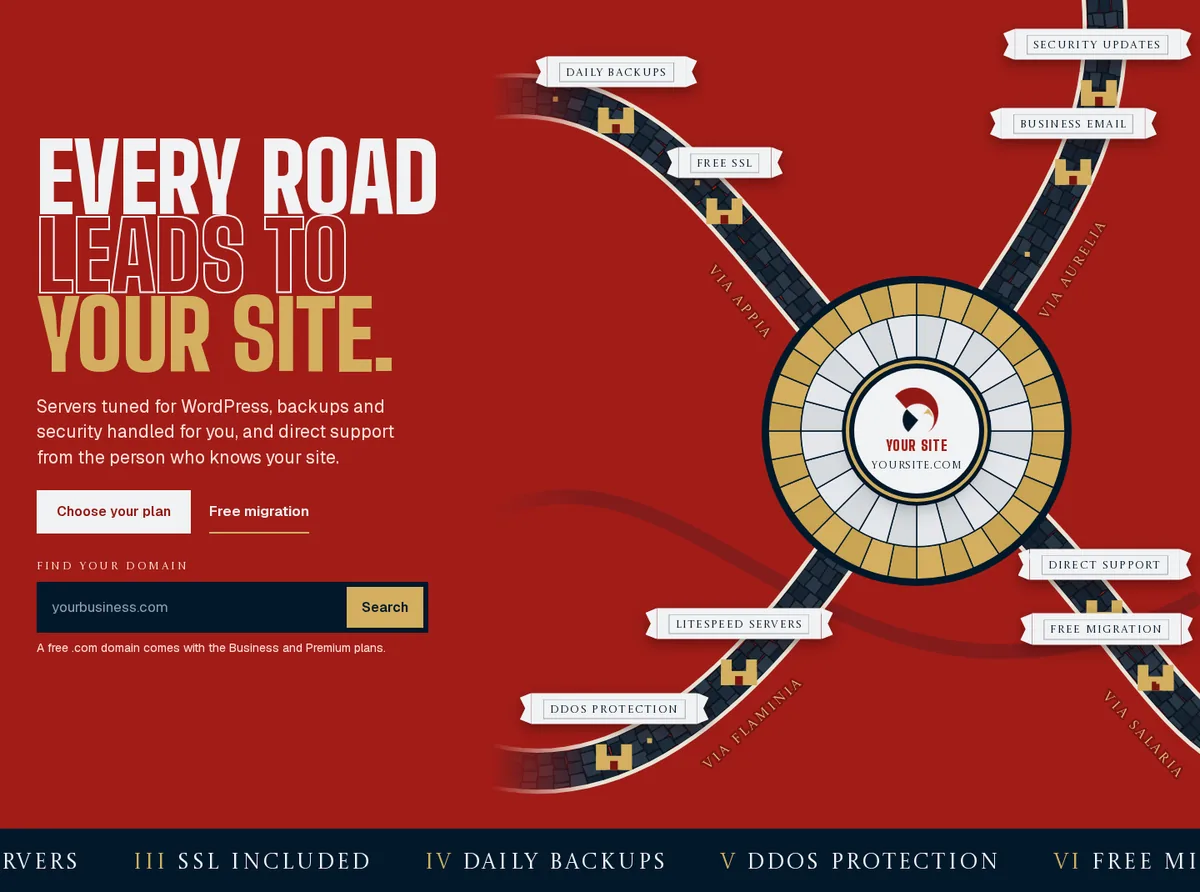
The site is built on one idea: a Roman road map where every included feature, from daily backups and SSL to business email and migration, is a road that leads to the customer’s site. The domain search sits in the first screen, so the first action is the one that starts a purchase.
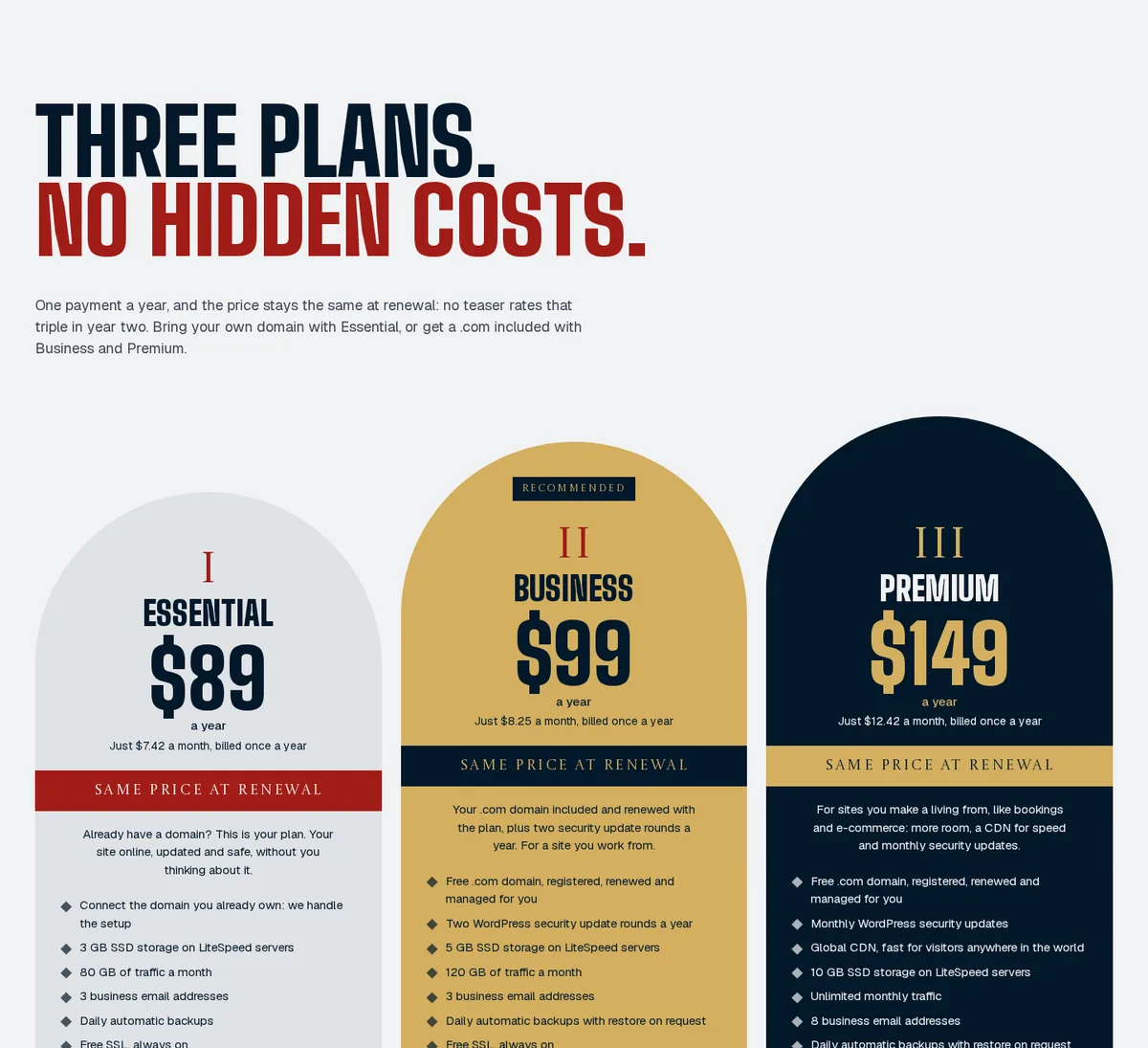
Plans are shown with the monthly equivalent, the same price at renewal and a three-year cost comparison, because the question every buyer has is what hosting really costs after the first year.
One flow from first visit to live site
WHMCS is the commercial and provisioning layer of the service. I designed the journey so that a purchase triggers the technical setup: the hosting account, the WordPress base and the DNS are ready without anyone configuring them by hand.
Find the domain
The visitor searches for a domain straight from the presentation site.
Choose a plan
Three plans with the same price at renewal and the yearly cost shown upfront.
Order and payment
The WHMCS store processes the order and the payment, then triggers the automation.
Automatic setup
A Plesk hosting account is created and an optimised WordPress base is installed.
Live on Cloudflare
The domain is added to Cloudflare, DNS records are created and the site goes live.
AI as an operational accelerator
AI is not a feature on top of the service. With AI-assisted development I designed and built the scripts behind it: provisioning, API integrations, DNS configuration, troubleshooting, monitoring and analytics.
The value is not faster coding. It keeps a fairly sophisticated hosting operation manageable without a large operations team, and performance monitoring becomes one more feedback loop into the product.
Removing DNS configuration from onboarding
Provisioning the hosting account solved only part of the problem. Each new domain also needed to be configured in Cloudflare and pointed to the right infrastructure.
I created a script that talks to the Cloudflare API: when a hosting package is activated, it creates the Cloudflare zone and the DNS records automatically. A repetitive technical task became part of the product flow.
Turning operational data into business intelligence
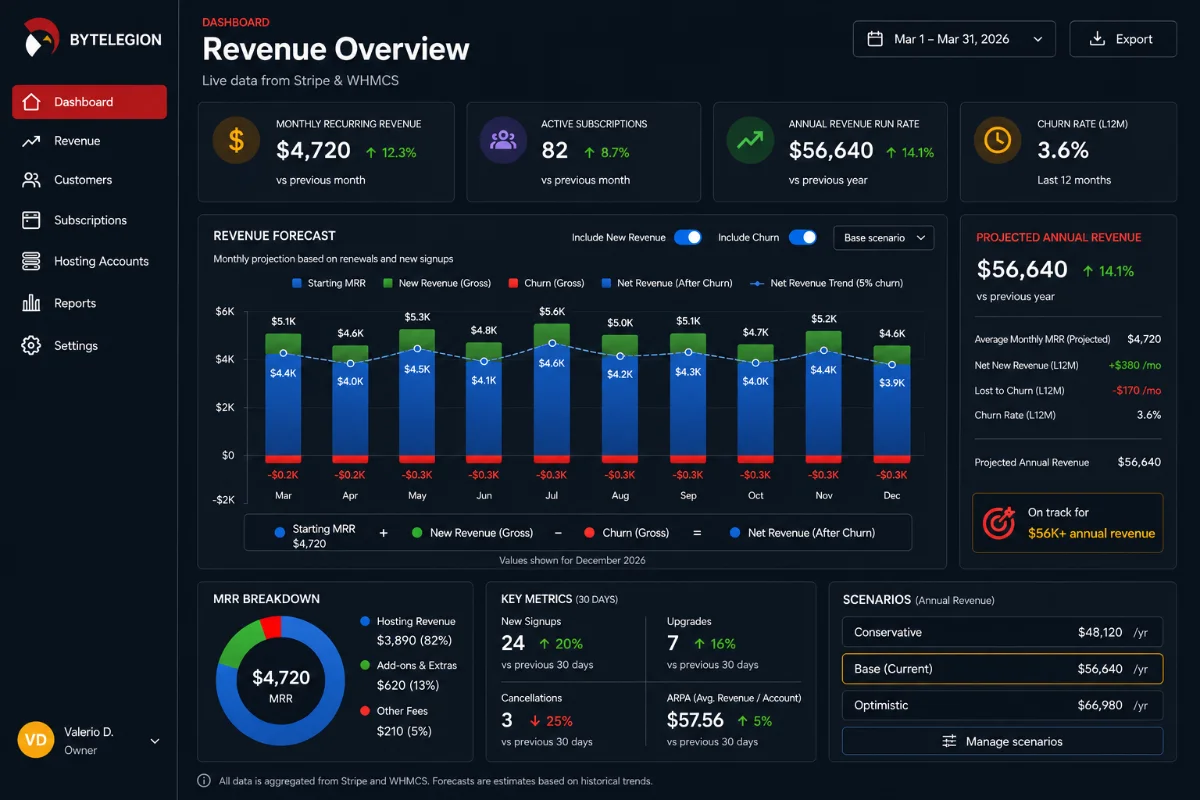
A service that runs itself still needs a clear view of where it is going. I designed and developed an internal dashboard that connects to Stripe and WHMCS through their APIs.
It aggregates live customer and revenue data, tracks churn and calculates projected monthly revenue. A forecasting model lets the team set an expected number of new accounts per month and see straight away how different acquisition scenarios change future revenue.
Alternatives compared: a promo price, or the same price at renewal
How the plans should be priced on the presentation site.
Low first-year price, higher at renewal
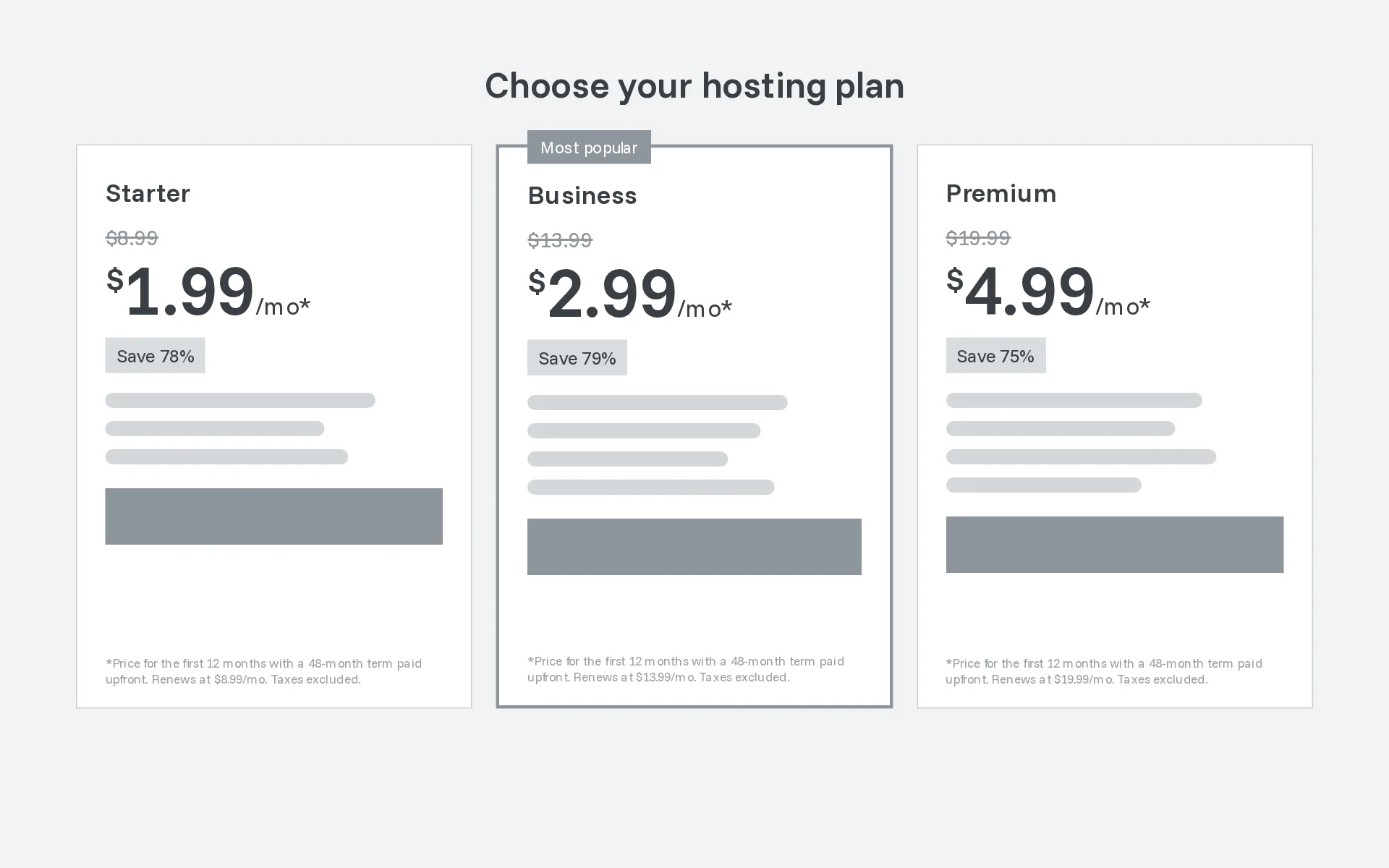
The usual hosting offer.
- Looks cheaper on a comparison page
- The real cost shows up in year two
Same price at renewal, three-year cost shown
Plans show the monthly equivalent, the same price at renewal and a three-year cost comparison.
- No surprise in year two
- Answers the question every buyer has before they ask it
The question every buyer has is what hosting really costs after the first year, so the plans answer it up front.
From reporting what happened to modelling what happens next
Most dashboards explain the past. This one is meant to help decide about the future: by combining recurring revenue, churn and expected acquisition, it models growth scenarios over the following months.
Revenue up 30%, effort not
ByteLegion Hosting grew its revenue by 30% over the past year. More importantly, the service is designed so that revenue can grow without operational effort growing at the same rate.
Provisioning, DNS configuration, billing and much of the reporting are automated, which leaves the team’s time for the product and the customers.
What this project taught me
ByteLegion Hosting is probably the clearest example of how I approach product work. It required me to move continuously between customer needs, UX, infrastructure, automation and business decisions.
There was no clean boundary between design and engineering. Every UX decision affected operations, every technical choice affected the customer experience, and every automation affected the economics of the service.
Design, engineering and business work best when they are treated as one system.